June 8, 2026
What Do Recycling Codes on Plastic Packaging Mean?
Recycling codes on plastic packaging indicate the type of material used. Discover what PET, HDPE, PP and other plastic codes mean.
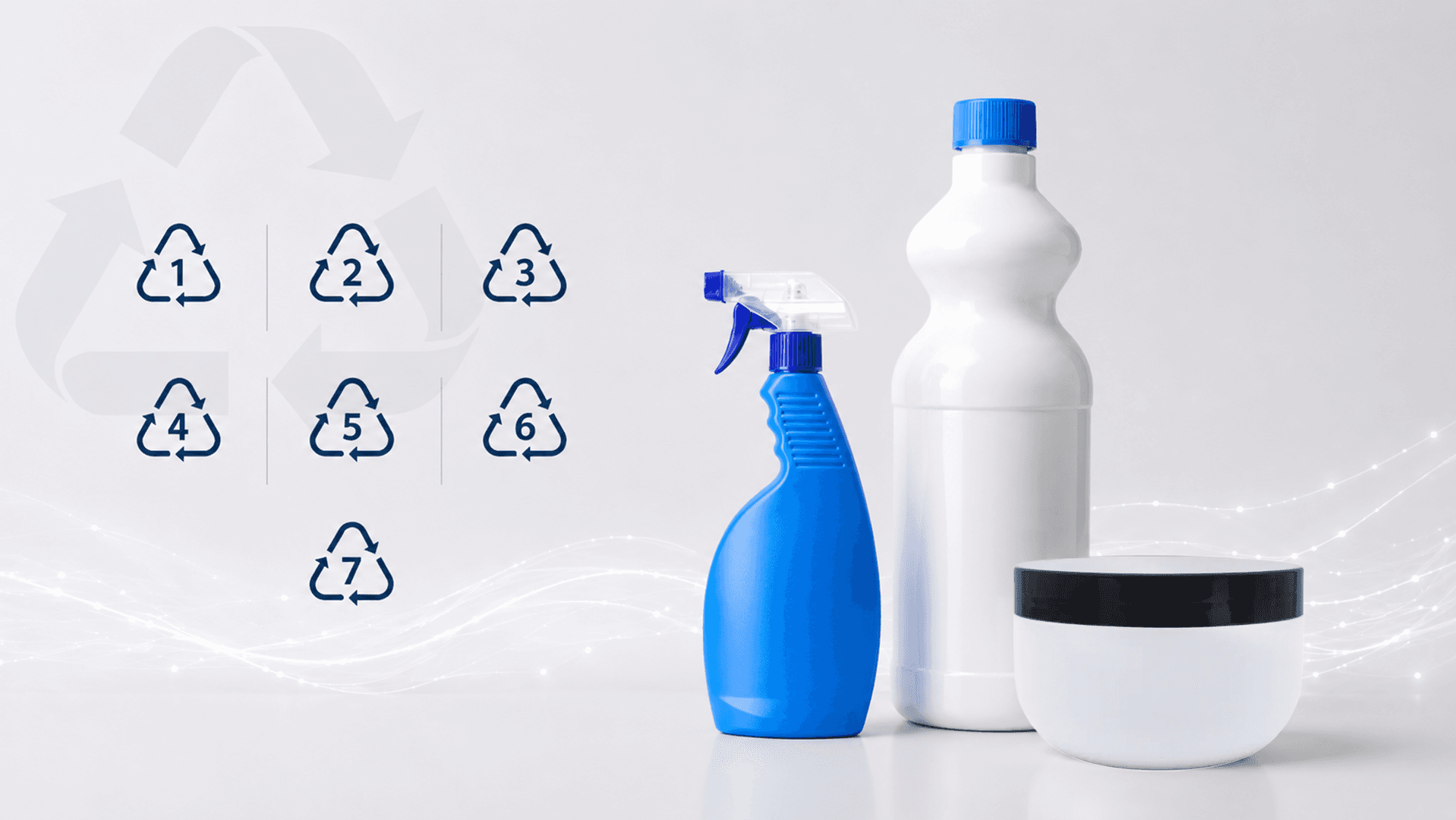
Plastic packaging is an important part of both daily life and production processes. Different plastic materials are used in many areas, from cosmetic products and cleaning products to food packaging and industrial product containers. However, not every plastic package is made from the same material, and not every type of plastic has the same properties. Therefore, the recycling codes found on plastic packaging serve as an important guide for identifying the material type and managing the recycling process correctly.
The numbers inside the triangle arrow symbol, often seen on the bottom of packaging or in the label area, are commonly interpreted by consumers simply as meaning “recyclable.” However, these codes actually indicate which type of plastic the packaging is made from. This information is critically important for recycling facilities, manufacturers, brands and consumers in terms of correctly sorting, processing and reusing the material.
Understanding recycling codes on plastic packaging creates important awareness both for sustainability goals and for choosing the right material. So, what do plastic recycling codes mean, and why are they important in the packaging industry?
What Are Recycling Codes?
Recycling codes are a numbering system used to identify different types of plastic materials. Generally, there is a number from 1 to 7 inside the triangle arrow symbol. These numbers indicate whether the packaging belongs to PET, HDPE, PVC, LDPE, PP, PS or other plastic types.
The main purpose of these codes is to ensure that plastics are sorted correctly during the recycling process, because different plastic types have different densities, melting temperatures, chemical properties and areas of use. Therefore, not all plastics can be processed in the same way. If correct sorting is not carried out, recycling efficiency may decrease and the quality of the recycled material obtained may be reduced.
Code 1: PET or PETE
Recycling code 1 refers to polyethylene terephthalate, known as PET or PETE. PET is frequently used in beverage bottles, some food packaging, cosmetic bottles and personal care products due to its transparency, lightness and barrier properties. It is one of the plastic types commonly accepted and evaluated in recycling systems.
Code 2: HDPE
Recycling code 2 refers to HDPE, or high-density polyethylene. HDPE is frequently used in cleaning products, detergent containers, shampoo bottles, cosmetic packaging and industrial product containers thanks to its durability, chemical resistance and low moisture permeability. With its recyclable structure, it holds an important place among sustainable packaging solutions.
Code 3: PVC
Recycling code 3 refers to PVC, or polyvinyl chloride. PVC is a plastic type that can be produced in durable, flexible or rigid forms. Apart from packaging, it is widely used in pipes, profiles and various industrial applications. Since its recycling process can be more complex compared to some other plastic types, it should be carefully evaluated according to the area of use.
Code 4: LDPE
Recycling code 4 refers to LDPE, or low-density polyethylene. LDPE is used in bags, film packaging, squeezable bottles and some flexible packaging solutions thanks to its flexible structure and ease of processing. It can be evaluated in recycling processes, but the recycling rate may vary depending on collection and sorting infrastructure.
Code 5: PP
Recycling code 5 refers to PP, or polypropylene. PP is preferred in the packaging industry especially for caps, jars, food containers, cosmetic packaging components and medical product packaging due to its heat resistance, rigidity and chemical resistance. Its recyclability makes PP one of the important materials for the packaging industry.
Code 6: PS
Recycling code 6 refers to PS, or polystyrene. PS can be used in some food containers, single-use products, protective packaging materials and foam forms due to its lightness and rigid structure. However, since its recycling process may be more limited, it should be carefully evaluated in sustainable packaging preferences.
Code 7: Other Plastic Types
Recycling code 7 refers to other plastic types or materials made from more than one type of plastic. This category may include polycarbonate, bioplastics, multilayer plastics or specially formulated plastics. Since the recycling process varies depending on the material used, this category requires detailed evaluation.
Why Are Recycling Codes Important?
Recycling codes help guide plastic packaging correctly after use. Proper sorting increases recycling efficiency and supports the quality of recycled raw materials.
For brands, recycling codes are an important part of sustainability communication and environmental responsibility. Thanks to the codes on packaging, consumers can see which type of plastic the product is made from and contribute to the recycling process more consciously.
For manufacturers, these codes guide material selection and design decisions. Packaging should not only be considered in terms of production and use, but also in terms of its post-use process. This approach contributes to applying the circular economy model more strongly in the packaging industry.
Recyclability in Packaging Design
Using a recyclable plastic material alone may not be sufficient. The design of the packaging should also be suitable for the recycling process. Using different materials together, labels that are difficult to separate, material incompatibility between cap and body, or unnecessary use of colors and additives may make the recycling process more difficult. Therefore, material selection, cap compatibility, label structure, color preference and product form should be evaluated together in packaging design. Simpler, separable and recycling-friendly packaging designs provide important advantages in terms of sustainability.
Tepe Plastik’s Sustainable Packaging Approach
As Tepe Plastik, with 50 years of experience, we evaluate quality, durability, safety and sustainability criteria together in plastic packaging and cap production. In our packaging solutions for cosmetics, cleaning, medical and various other sectors, we adopt an approach that values material selection suitable for product needs and post-use processes.
In the packaging solutions we develop with HDPE, PP and different plastic materials, we consider product safety, functionality, production quality and sustainability expectations together. The right packaging is not only a structure that protects the product; it is also an important element that reflects a brand’s understanding of quality, environmental responsibility and the value it gives to consumers.
Understanding recycling codes on plastic packaging correctly helps manufacturers, brands and consumers make more conscious choices. As Tepe Plastik, we continue to develop reliable and sustainable packaging solutions suitable for the needs of the industry.